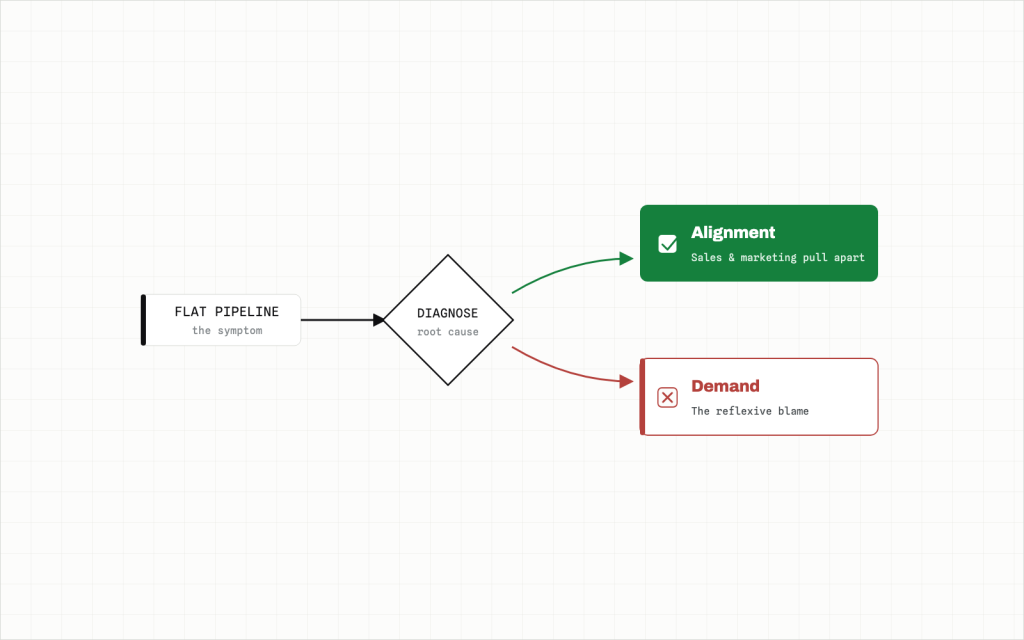
When the number is down, "the funnel's broken" is the easy answer. It's also usually the wrong one. The choice between a demand problem vs alignment problem is the first fork in any honest diagnosis, and the two causes need opposite fixes. Get the fork wrong and you spend real budget making the actual problem worse. This is a short differential — a way to tell which problem you actually have before you commit a dollar to the wrong one.
A demand problem and an alignment problem look nearly identical from the dashboard. Revenue dips, conversions stall, the pipeline thins out. But one means you don't have enough of the right people entering at the top, and the other means the right people are entering and quietly leaking out of the middle. Pour more leads into a leak and you'll spend more to convert less. Re-org the handoff when the top of the funnel is actually empty and you'll burn weeks fixing a seam that was never the issue.
Demand problem vs. alignment problem — what's the difference?
The two problems live in different parts of the funnel, and that's the whole distinction. One is a top-of-funnel volume issue. The other is a mid-funnel friction issue. They produce the same symptom on the surface — disappointing revenue — and the same reflex internally — blame whoever owns the nearest metric. Naming which one you have is the difference between a fix that works and a fix that looks busy.
A demand problem (top of funnel)
A demand problem is simple to define and uncomfortable to admit: not enough of the right people are entering the funnel. Top-of-funnel volume is genuinely down, or it was never high enough to support the revenue target in the first place. The people who do enter may convert at a perfectly healthy rate — there just aren't enough of them.
The fix for a demand problem points outward. More and better demand generation. A sharper ICP. Messaging that actually lands with the buyers you want, in the channels they're in. Re-organizing the sales-to-marketing handoff does nothing here, because the handoff isn't where the loss is happening. The loss is happening before anyone reaches the handoff at all.
An alignment problem (the middle)
An alignment problem is the opposite shape. The right people are entering at a healthy volume — and then they leak between marketing and sales. A lead gets passed and goes cold. Two teams define a "good lead" differently and quietly disqualify each other's work. Follow-up arrives days late, or never. The volume is there; the conversion craters somewhere in the middle.
This is the case practitioners are pointing at when they say most funnel problems are foundation problems — the issue isn't the volume coming in, it's the structure that volume runs through. The fix points inward: align the definitions, fix the seam, repair the handoff. Spending more on demand here is the classic mistake. You'd be adding fuel to a system that's losing what it already has.
| Signal | Demand problem | Alignment problem |
|---|---|---|
| Where it lives | Top of funnel | The middle (between teams) |
| Symptom | Volume is genuinely down | Volume steady, conversion craters |
| Likely cause | Not enough of the right people entering | Right people leaking between sales and marketing |
| Right fix | Demand gen, ICP, messaging | Align definitions, fix the handoff seam |
| Wrong fix | Re-org the handoff | Spend more on lead gen |
Why teams misdiagnose this (and spend on the wrong fix)
The misdiagnosis is structural, not careless. When results dip, the reflex is to blame the funnel, then marketing, then sales — in roughly that order — and to fund the loudest assumption in the room. Whoever argues hardest, or owns the metric that looks worst this week, sets the spend. That's how a demand fix gets pointed at an alignment problem, and vice versa.
It's made worse by separate scorecards. Marketing measures leads delivered. Sales measures deals closed. Each team sees only its own half of the funnel, so each team narrates the same downturn as the other team's failure — same data, opposite stories. The gap isn't only emotional, it's definitional: in one industry survey, 49% of chief sales officers said their definition of a qualified lead differs significantly from marketing's. When two teams can't agree on what a good lead even is, they will never agree on whether the problem is too few of them or too many leaking away.
This is the "you can't read the label from inside the jar" problem. Each team is inside its own jar, reading its own half of the label, and neither can see the whole. The honest answer to which problem do we have almost never comes from the people closest to the funnel — it comes from a read that sits outside both teams' scorecards.
Three questions to tell which problem you have
Before you spend on a fix, answer three questions. Each one separates a demand problem from an alignment problem along a different axis. Answer all three the same direction and you have a clear diagnosis. Answer them in conflicting directions and you've found exactly where to look closer.
1. Is top-of-funnel volume actually down — or just conversion?
Pull the raw counts, not the rates. If the number of qualified people entering the funnel is genuinely lower than it was when revenue was healthy, that points to demand. If volume is flat or up but the rate at which those people convert has cratered, that points to alignment. Rates hide this — a falling conversion rate can mask steady volume, and a steady conversion rate can mask collapsing volume. Look at the absolute count first.
2. Do sales and marketing agree on what a "good lead" is?
Ask each team, separately, to define a qualified lead — the criteria, not the vibe. If the two definitions don't match, you have an alignment problem regardless of what the volume numbers say. A shared definition is the load-bearing wall of the handoff; without it, marketing is "delivering leads" that sales doesn't count as leads at all, and the loss between those two views is invisible on every dashboard. This is the single fastest tell, because misalignment here guarantees leakage downstream.
3. Where exactly do deals stall — and does each team tell the same story?
Find the stage where deals consistently die, then ask each team why it happens there. If marketing says "sales doesn't follow up" and sales says "the leads were never real," you have two different stories about the same stall — that's misalignment, not a demand gap. When both teams independently describe the same cause at the same stage, you're closer to a genuine volume or fit problem at the top. Different stories about the same stall is the clearest fingerprint of a seam that's leaking.
A fourth question is worth asking if the first three come back mixed: has your go-to-market motion and ICP been validated with real buyers recently? An ICP that drifted out of date produces a demand problem that masquerades as an alignment one — you're attracting people, just not the right people, and no amount of handoff repair fixes a targeting miss.
What to do with the answer
The point of the differential is that the answer dictates the spend. Three honest answers should point you cleanly in one of three directions.
If it's a demand problem
Invest where the shortage is: demand generation, ICP, and messaging. Sharpen who you're targeting and whether your message reaches them. Do not spend the quarter re-organizing the handoff — there's nothing wrong with the seam between your teams if not enough people are reaching it. Fixing alignment when the top of the funnel is empty is motion without progress.
If it's an alignment problem
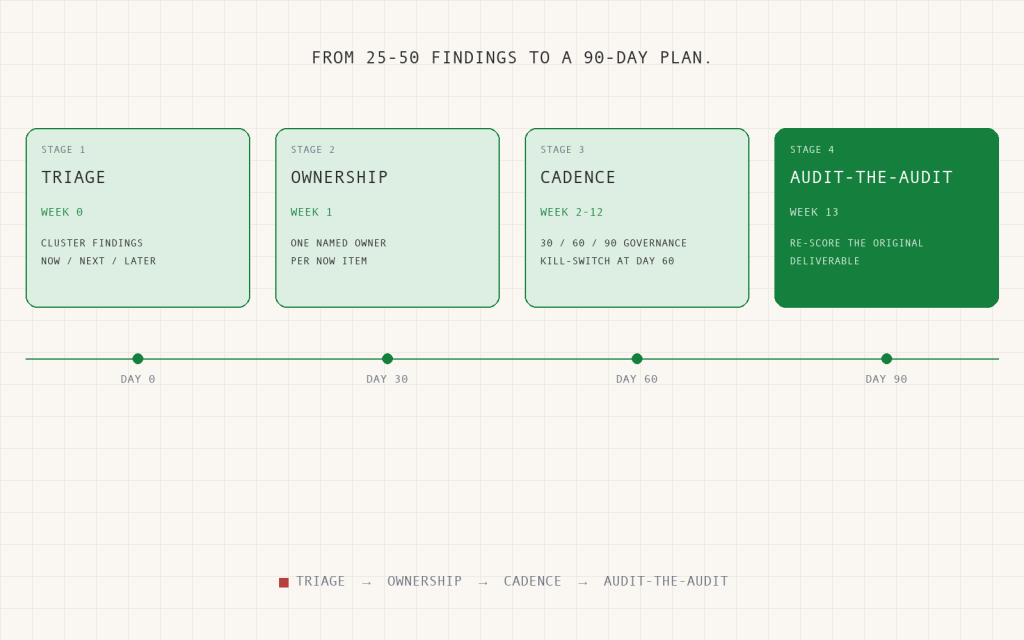
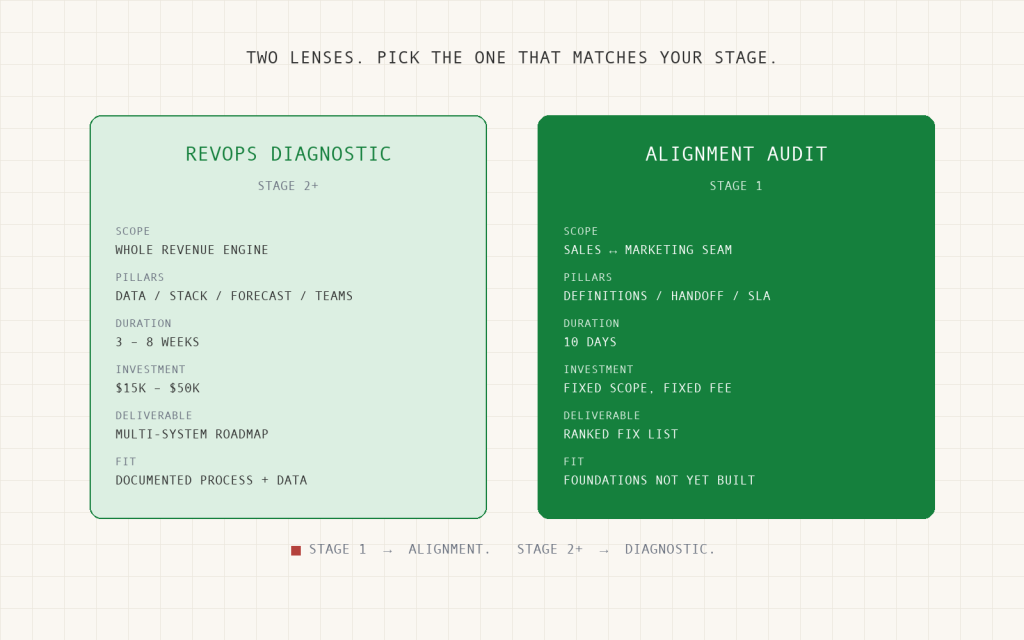
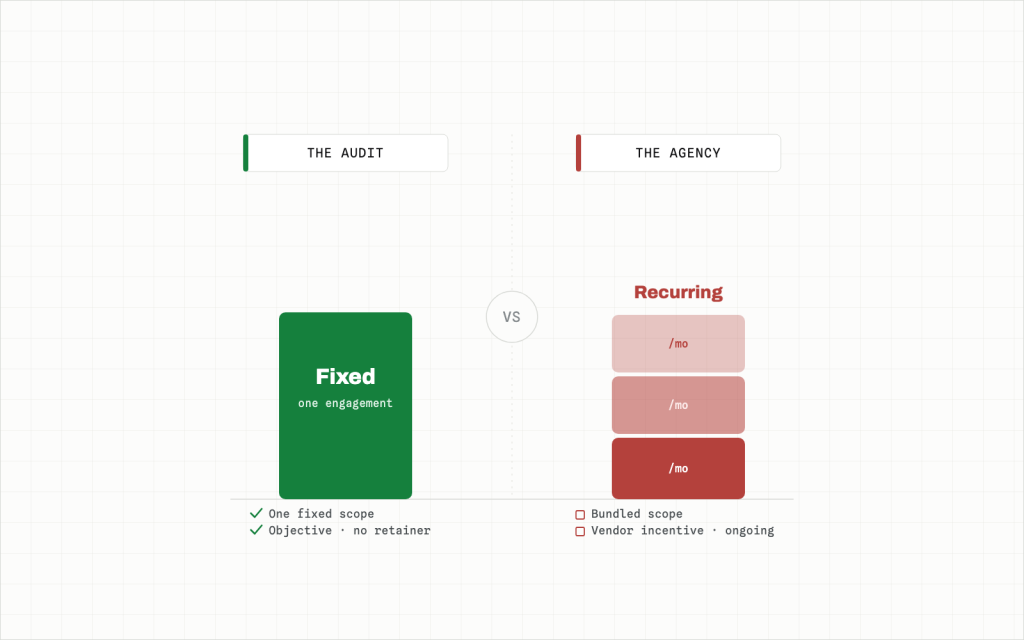
Map the leak and fix the seam — not the volume. Start with the shared definition of a qualified lead, then the handoff mechanics around it. If you want the specifics of where these leaks tend to hide, this companion piece walks the exact stages: where pipeline quietly leaks between sales and marketing. And before you commit budget to a fix, get an objective read of which seam is actually losing the most — get an objective audit, not a retainer to guess.
If you genuinely can't tell
This is the most common honest answer — and it's a signal, not a failure. If your three answers come back mixed, or each team's version of events contradicts the other's, you're reading the label from inside the jar. That's exactly the case for an outside diagnosis: a structured read from someone with no stake in which answer is true. Here's how that diagnostic works — interviews and questionnaires with both teams, analyzed against the data both teams act on, to name the real root cause objectively.
Diagnose before you spend
A demand problem and an alignment problem look identical from the dashboard and need opposite fixes. One asks for more of the right people at the top; the other asks you to stop losing the right people in the middle. Spend on the wrong one and you don't just waste the budget — you make the real problem harder to see. Answer the three questions first. Look at volume versus conversion, check whether your teams agree on a good lead, and listen for whether they tell the same story about where deals stall.
The hardest part isn't the questions — it's answering them honestly about your own funnel, which is the one thing the people inside it can't reliably do. If you want a clear, objective answer before you commit budget to the wrong fix, book the Marketing Alignment Audit: a senior outside read that names the real root cause first. Book the audit and get the diagnosis before the spend.